Sports
Many homeschoolers enjoy sports as part of their homeschooling curriculum and lifestyle. More and more sports leagues are forming to meet the specific needs of homeschooling families. Explore some of the options available to you and your family.
Homeschool Sports Leagues
Homeschool Basketball USA
Homeschool Basketball USA is a member of the National Christian Homeschool Athletic Association (NCHAA). This site is dedicated to providing news links, resource links, opportunities, information, and more about homeschool basketball across the USA, as well as to promote its growth and development.
Home School SportsNet
This homeschool sports league supports homeschool parents, athletes, coaches, teams and organizations through means of an interactive website, newsletters, workshops and free postings. They provide national athletic events for homeschool students in a Christian environment. They offer encouragement to new start-up teams as well as established organizations with online materials and resources. They also have partnered with other organizations to offer sports insurance, uniforms, fundraising resources, and college recruitment.
High School and College Athletics for Homeschoolers
Home School Transcript Example
This pdf offers an example homeschool transcript that would be suitable to determine eligibility for NCAA purposes to participate in college-level athletics.
Home School Checklist
This home school checklist from the NCAA Eligibility Center offers an easy to use list of elements needed to evaluate a student's eligibility to play college sports (Division I or II schools).
Home School Toolkit
This comprehensive toolkit publication guides homeschoolers to determine their NCAA eligibility. This pdf file covers classification of the homeschool program, evaluation of home school umbrella programs, transcript information, proof of graduation, a core-course worksheet, a discussion of the evaluation process, and an extensive list of resources for the home educating family.
Home School Administrator and Accordance Statement
This form should be filled out by the parent administering the home school program for their NCAA-eligible student wishing to pursue collegiate-level sports.
A House Divided: Homeschool Students on School Sports Teams
As the number of high school students who are homeschooled continues to rise, leaders in high school sports across the country face growing interest among these students and their parents to play sports on their local public school teams. Interest continues to build in homeschoolers’ participation on public schools sports teams. In some states, that option exists, although the requirements vary from state to state with some states requiring part-time enrollment in the local school. In other states, the debate continues as to whether homeschooled students should be allowed to play on the local high school team alongside students who attend classes at the school all day long.
So, You Want to Play College Ball?
Good news for homeschoolers who want to receive NCAA (National Collegiate Athletic Association) scholarships and participate in college sports! Homeschoolers have finally been recognized as high school graduates by the NCAA. Homeschool students no longer have to go through the “waiver process,” but can now register in the same manner as “traditionally schooled” graduates.
State Laws Concerning Participation of Homeschool Students in Public School Activities
This is a list of states that have addressed issues of homeschooler participation in public school classes, sports,
activities, etc.
NCAA Guidelines for Home School Students
The National Collegiate Athletic Association (NCAA) is a voluntary organization through which the nation's colleges and universities govern their athletics programs. If you want to play NCAA sports at a Division I or II school, you need to register with the NCAA Eligibility Center if you were home schooled for any part of high school. If you are planning to attend a Division III school, you do not need to register with the NCAA Eligibility Center.
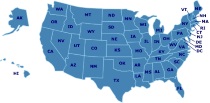
Looking for Another State?
Featured Resources
As an Amazon Associate, we earn from qualifying purchases. We get commissions for purchases made through links on this site.
A History of Science
A History of Science is not a textbook, but is a guide to help parents and children study science through literature. It is intended for children in elementary grades.

A Twaddle-Free Education: An Introduction to Charlotte Mason's Timeless Educational Ideas
Are you disappointed with dumbed-down reading material (“twaddle”) written for children? Do you wish for your children to feast their hearts and minds on noble ideas, fine art, and great literature? Are you hoping your children gain an appreciation of nature and a deep understanding of natural sciences? Most importantly, do you want your children to develop a lifetime love of learning? If you answered “yes,” you may discover a Charlotte Mason-inspired twaddle-free education is just what you’ve b...

Pass Your New York DMV Test Guaranteed! 50 Real Test Questions! New York DMV Practice Test Questions
This book is written by a former DMV classroom instructor. He shares the 50 most common questions and answers to the New York DMV written test. A great guide to help your teen pass the DMV test on their first try.

Basic Montessori: Learning Activities for Under-Fives
For the first time, Basic Montessori opens the celebrated philosophy and method to a more general public. David Gettman has devised a clear and modern explanation of Montessori's revolutionary ideas about early intellectual development, and provides a step-by-step guide to the Montessori learning activities most commonly used with under-fives. These include activities for introducing reading and writing, counting and decimal concepts, science, and geography, as well as activities that help dev...

Traffic: Why We Drive the Way We Do (and What It Says About Us)
In this brilliant, lively, and eye-opening investigation, Tom Vanderbilt examines the perceptual limits and cognitive underpinnings that make us worse drivers than we think we are. He demonstrates why plans to protect pedestrians from cars often lead to more accidents. He uncovers who is more likely to honk at whom, and why. He explains why traffic jams form, outlines the unintended consequences of our quest for safety, and even identifies the most common mistake drivers make in parking lots. Tr...